How the Sega Dreamcast Changed Gaming Forever
In the grand story of video game history, few consoles have burned as brightly, and briefly as the Sega Dreamcast. Released in North America on September 9, 1999 (9/9/99), Sega’s final console arrived with huge ambition. Dreamcast was ahead of its time in ways that weren’t fully appreciated until years later. It was powerful, innovative, and confident. For a moment, it felt like Sega was back on top.
But despite strong sales at launch and a wave of critical praise, the Dreamcast’s life was cut short in 2001. Sony’s PlayStation 2 dominated the market, and Sega exited the hardware business for good. On paper, that sounds like a failure.
In reality, the Dreamcast changed gaming forever.
It introduced ideas that were years ahead of their time, ideas that are now standard across the industry. From online console gaming to open-world design and arcade-perfect ports, through the Dreamcast, SEGA planted seeds that continue to shape how we play today.
Let’s take a deeper look at how Sega’s swan song rewrote the rules.
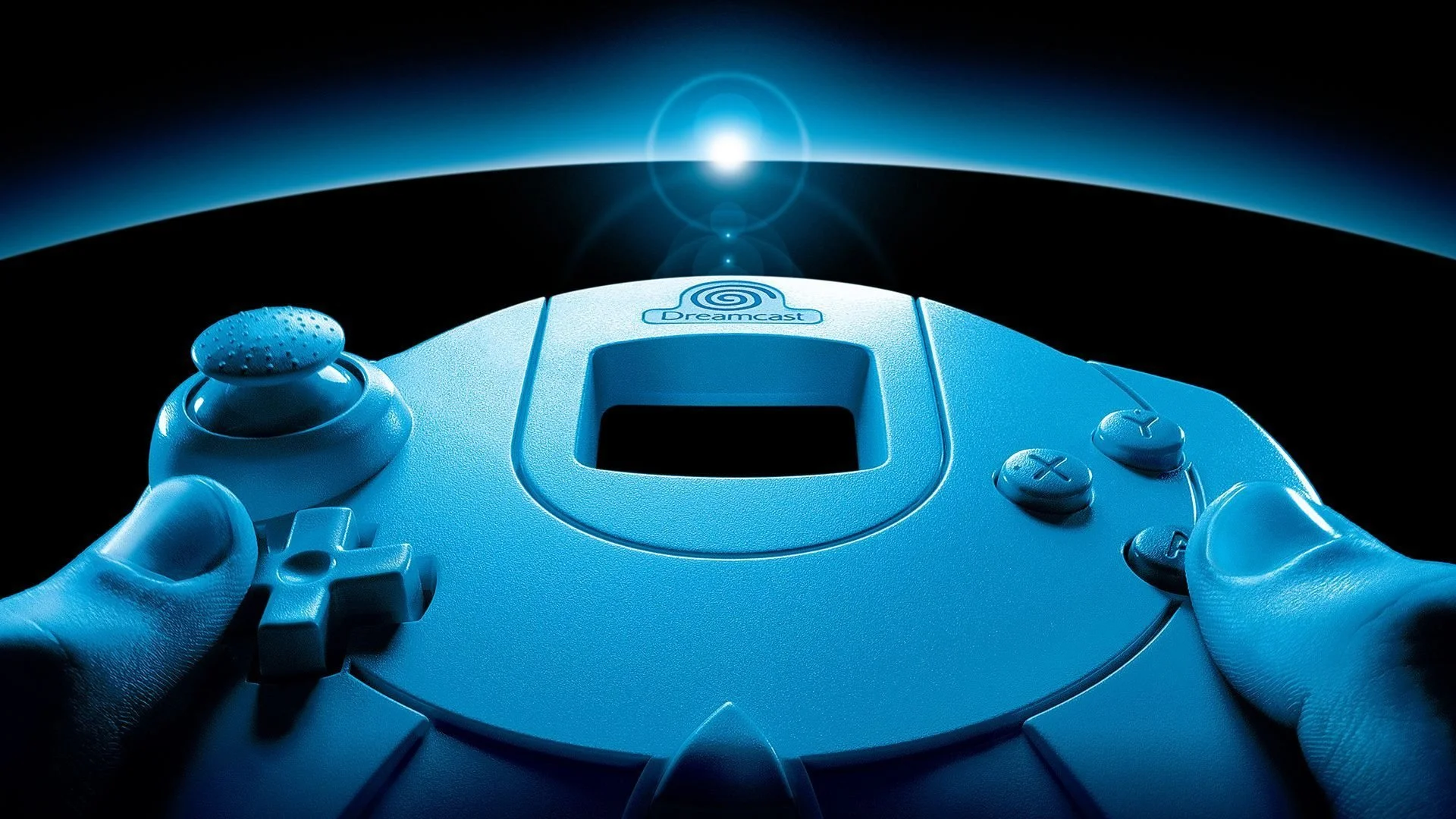
Image: © SEGA – Dreamcast (1999)
Was Dreamcast was ahead of its time?
From Day One
When the Dreamcast launched, the gaming world was still rooted in the late ‘90s mindset. Most players were using dial-up internet, if they even had it. Online gaming was new and largely limited to PC. Consoles were still focused on couch multiplayer and single-player experiences.
Sega looked at that landscape and decided to leap forward.
Every Dreamcast came with a built-in modem, 56K in North America. That alone was revolutionary. Players didn’t need expensive add-ons or complicated setups. Out of the box you just plugged your phone line into the console, popped in a disc, and connected to the internet.
The system even included a web browser disc. You could surf the internet from your TV. It seems simple now, but in 1999, that felt futuristic. It also had mouse and keyboard peripherals you could buy to use with the web browser and compatible games like first person shooters.
Sega wasn’t just experimenting. They were betting that online connectivity was the future of console gaming.
They were right.
The First Truly Online Console
Before Xbox Live. Before PlayStation Network. Before digital downloads and day-one patches. There was Dreamcast.
SegaNet allowed players to compete online in games like Quake III Arena, Unreal Tournament, ChuChu Rocket!, and NFL 2K series. These weren’t small experiments. They were fully realized online experiences running on a home console.
Then came Phantasy Star Online.
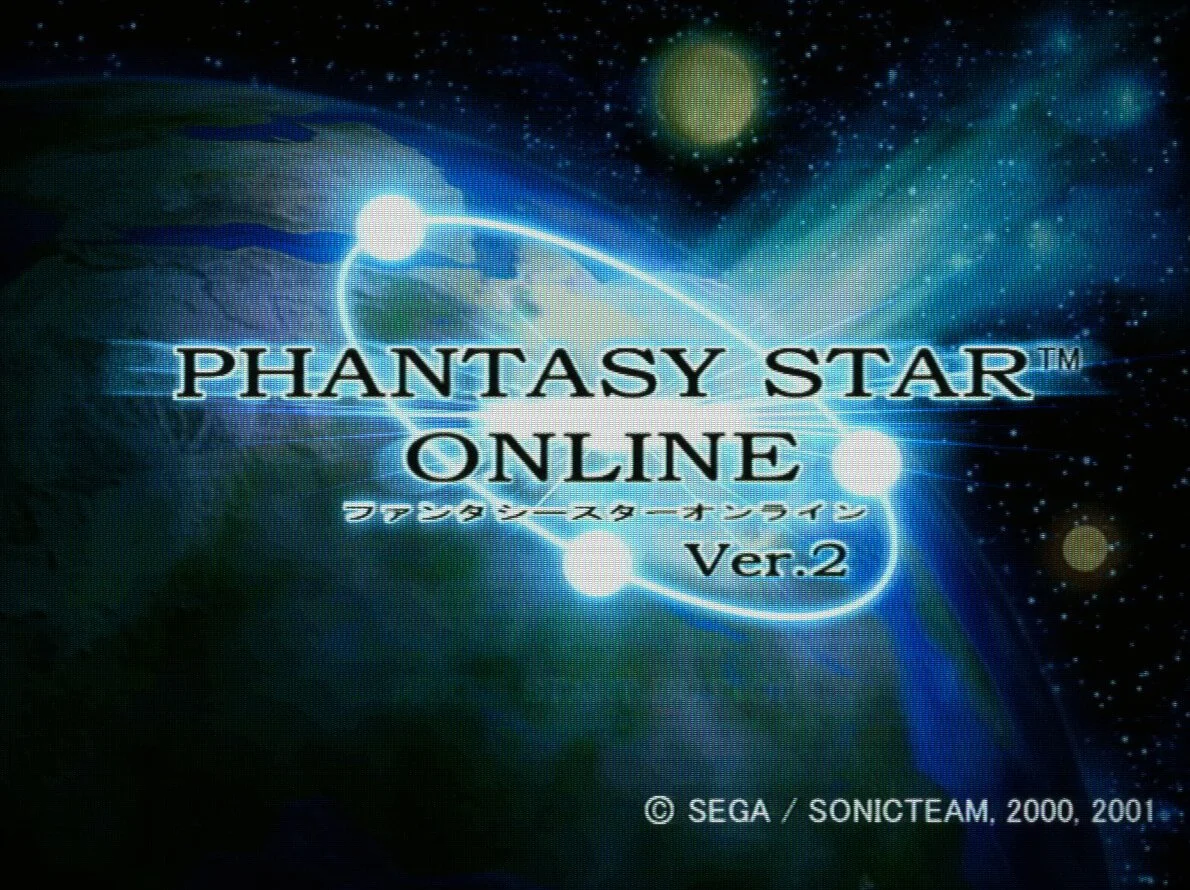
Phantasy Star Online - Dreamcast
This was the moment everything changed.
Phantasy Star Online was a full MMORPG on a console. It featured online lobbies, chat systems, party creation, character progression, and a persistent world. Players teamed up with strangers across the country, and the world, to complete quests and hunt rare items. There were strings of auto translated communication choices that allowed players to connect and talk with players no matter what language they spoke.
Today, that sounds normal. In 2000, it felt impossible.
For many console players, Phantasy Star Online was their first taste of online community gaming. It showed that online worlds didn’t belong only to PC gamers. Consoles could do it too.
Microsoft took notice. When Xbox launched in 2001, it pushed online infrastructure even harder. Xbox Live followed in 2002, building on ideas Sega had already tested.
The Dreamcast didn’t just experiment with online play. It proved it worked.
Arcade-Perfect Ports Thanks to NAOMI Hardware
Sega’s arcade legacy was legendary. Throughout the ‘80s and ‘90s, Sega dominated arcades with hits like OutRun, Virtua Fighter, and Daytona USA. With the Dreamcast, Sega brought the arcade home in a way that had never been done before.
The console shared similar architecture with Sega’s NAOMI arcade board. That meant arcade games could be ported to Dreamcast with almost no compromise. What you played at the arcade was nearly identical to what you played in your living room.
And the results were stunning. This was at a time where arcade games had graphics that weren’t possible on a home console and it was mind blowing to experience.
Crazy Taxi exploded onto home consoles with smooth performance and vibrant colors. Soul Calibur looked even better on Dreamcast than it did in arcades. Marvel vs. Capcom 2 was fast, crisp and became a competitive staple. House of the Dead 2 delivered the full light-gun experience with all the graphical bells and whistles of the arcade cabinet.
For arcade fans, this was a dream come true. It offered a genuine arcade experience without needing a pocket full of quarters.
The Dreamcast preserved arcade culture at a time when arcades were beginning to decline. It became a bridge between the arcade era and the modern console era.
Even today, many of the best arcade conversions ever made trace back to the Dreamcast.
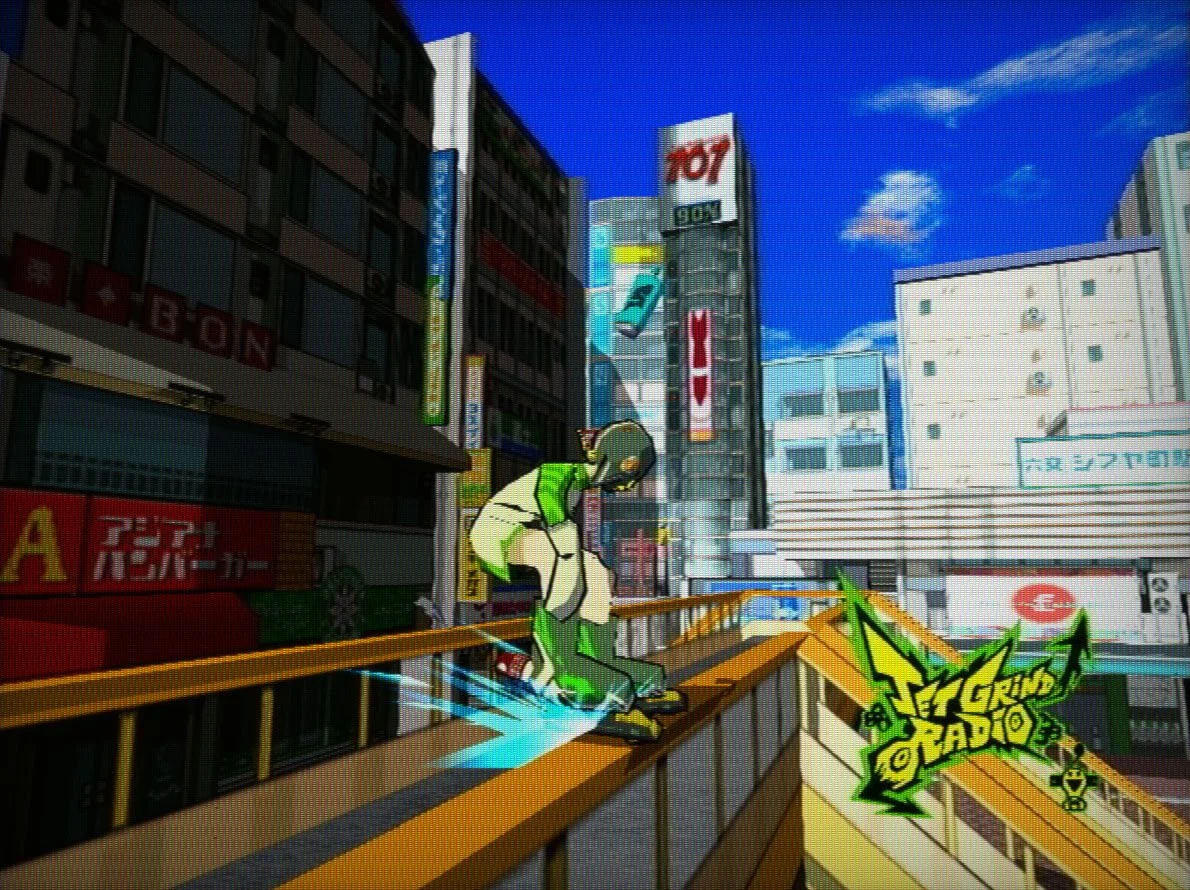
Jet Grind Radio - Dreamcast
A Visual and Audio Leap Forward
Compared to the PlayStation and Nintendo 64, the Dreamcast felt like a generational leap.
Games were sharper. Textures were cleaner. Colors were brighter. Frame rates were smoother.
Titles like Jet Set Radio introduced cel-shaded graphics to a mainstream audience. Its bold art style would influence games for decades, paving the way for titles like The Legend of Zelda: The Wind Waker and Borderlands.
Skies of Arcadia delivered massive floating continents and sweeping sky battles. Sonic Adventure brought Sega’s mascot into full 3D with cinematic presentation and voice acting.
And then there was Shenmue.
Shenmue and the Birth of the Modern Open World
When Shenmue released in 1999 (Japan) and 2000 (North America), it was unlike anything else on consoles.
The game featured a fully explorable town with a real-time day and night cycle. NPCs followed daily routines. Shops opened and closed at specific hours. You could examine drawers, collect capsule toys, and work a part-time job driving a forklift.
It blurred the line between game and simulation.
Today, open-world games are everywhere. From Grand Theft Auto to Yakuza to Red Dead Redemption, the idea of a living, breathing world is expected.
Shenmue helped pioneer that concept on consoles.
It also popularized quick-time events (QTEs), cinematic storytelling, and immersive environmental detail. While not every mechanic aged perfectly, its ambition cannot be overstated.
With Shenmue, the Dreamcast proved that consoles could handle complex, cinematic, open-ended experiences.
Hardware Innovation
A Clean, Modern Design Aesthetic
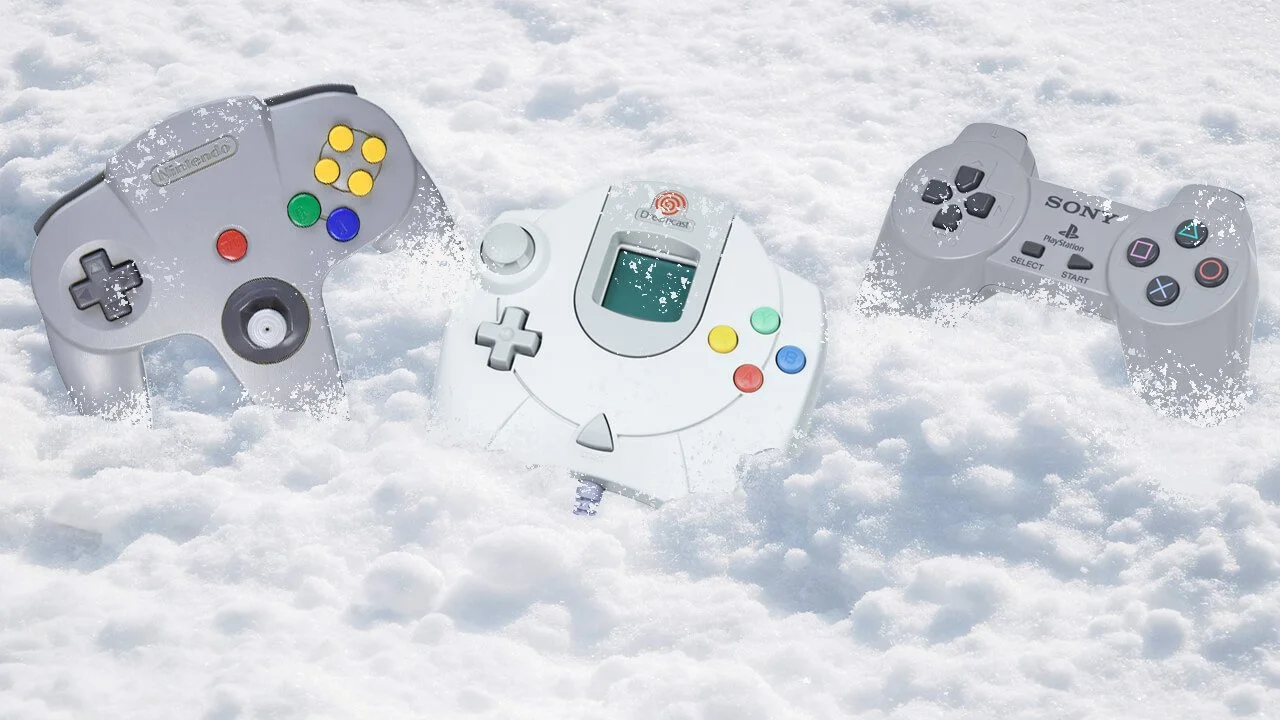
When the Dreamcast launched in 1999, most consoles still had a very “’90s tech” look. The original PlayStation was gray and boxy. The Nintendo 64 was bulky and toy-like and the Sega Saturn looked like a piece of office equipment.
When you saw the Dreamcast if felt like you were looking at the future.
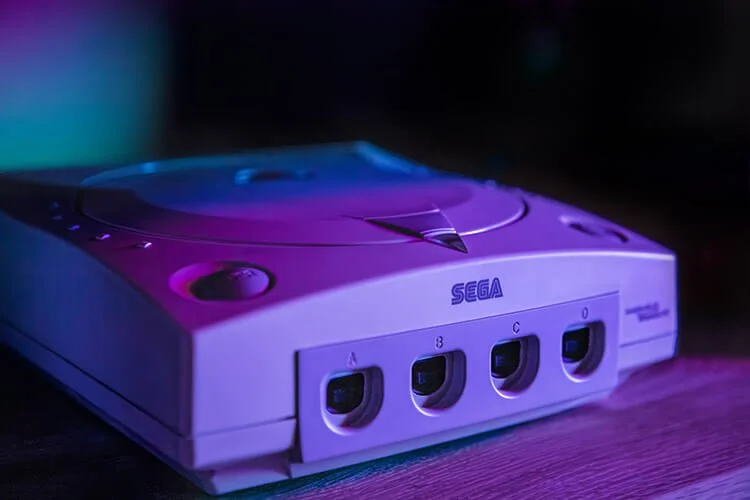
Image Credit: Photo by Taylor R
On the outside it had:
A clean white shell
Smooth, rounded edges
A compact footprint
A bright orange swirl logo that felt bold and modern
It looked futuristic but minimal. It didn’t scream “toy.” It looked like a sleek piece of home electronics.
In many ways, it predicted the early-2000s shift toward cleaner consumer tech design, something Apple would popularize just a few years later with the iMac and iPod. The Dreamcast felt closer to 2005 design language than 1995.
Even today, that white shell looks sharp on a shelf.
Including four controller ports directly on the console was a bigger deal than it sounds.
Apart from the N64, we had primarily been limited to two players:
PlayStation required a multitap accessory for more than two players.
Sega Saturn required add-ons for expanded multiplayer.
NES, Genesis and SNES all had two controller ports with multitaps available for purchase.
With the Dreamcast, Sega made four-player support part of the core experience. No accessories. No extra purchases. Just plug in and play.
The Controller
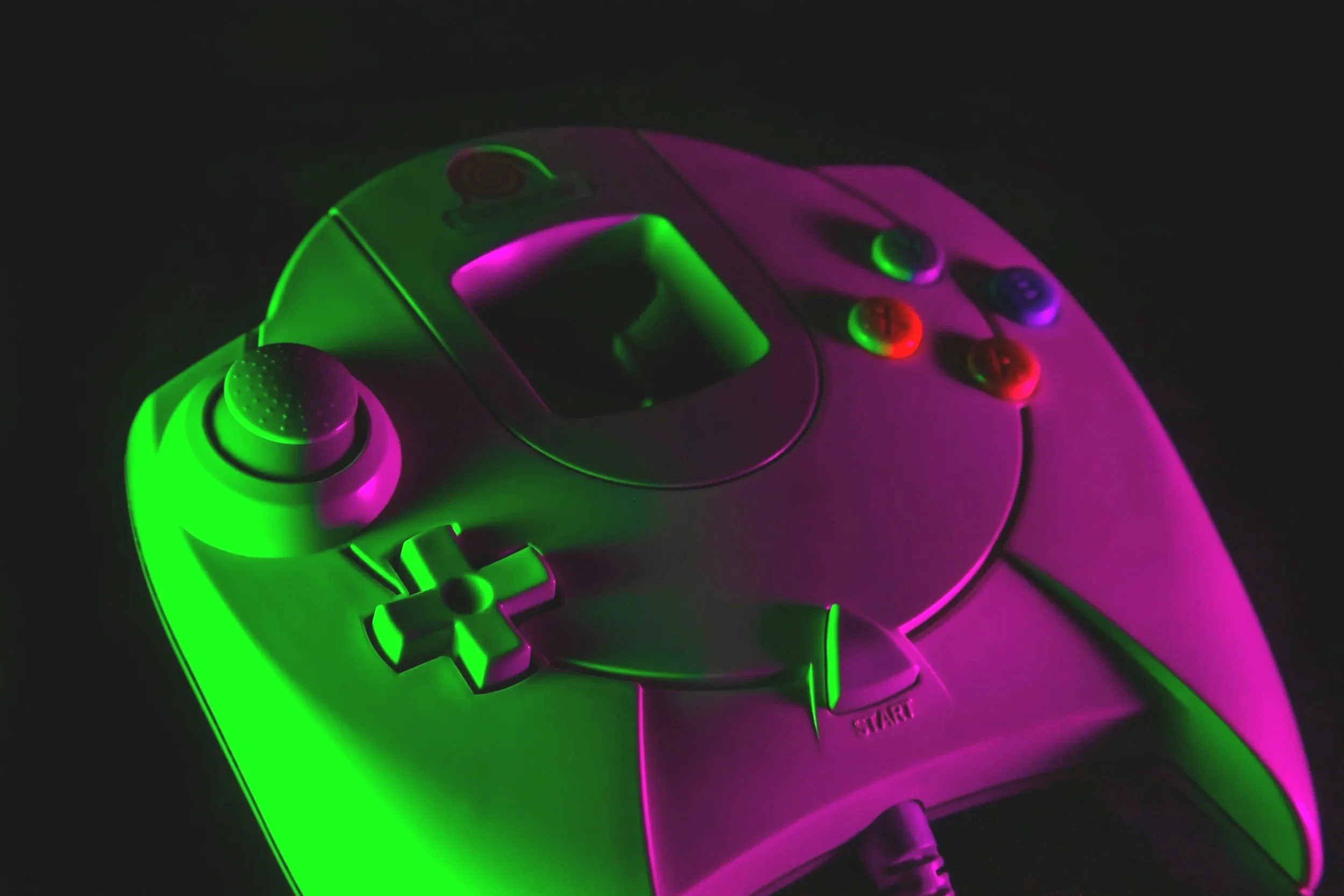
Image Credit: Photo by Taylor R
The Dreamcast controller looked unusual, but it was packed with creativity. It introduced several important innovations and design shifts that helped shape modern controllers.
Built-In Analog Triggers - One of its most forward-thinking features was the analog triggers. Instead of simple digital shoulder buttons (on or off), the Dreamcast used pressure-sensitive triggers.
This allowed for more precise control, especially in racing games like Crazy Taxi and Sega Rally 2. The harder you pressed, the more acceleration or braking you got. Today, analog triggers are standard on Xbox controllers and widely used across modern gaming. In 1999, this was cutting-edge.
Standardized Analog Stick for 3D Gaming - While Nintendo introduced an analog stick with the N64, the Dreamcast helped solidify the idea that 3D games required analog movement as a standard feature.
The single analog stick was positioned comfortably in the center, making movement feel natural for 3D action games like Sonic Adventure and Shenmue. It helped push the industry further into fully 3D design.
Expandability and Modular Design - Even beyond the VMU, the controller had two expansion slots. This allowed for accessories like rumble packs, microphones and other future add-ons. This modular approach showed Sega was thinking about flexibility and forward compatibility.
Early Emphasis on Ergonomics - The controller featured large grips and a wide, comfortable shape that influenced later designs. While some criticize the cord placement (coming out of the bottom), the overall form factor feels closer to modern controllers than many of its ‘90s competitors.
The Dreamcast controller acted as a bridge between the experimental ‘90s and the standardized 2000s controller design.
Analog triggers, comfortable grips, and modular expansion are all ideas that carried forward into future generations, especially into Microsoft’s Xbox controller design philosophy.
Even without the VMU, the Dreamcast controller quietly helped shape the way we hold and play games today.
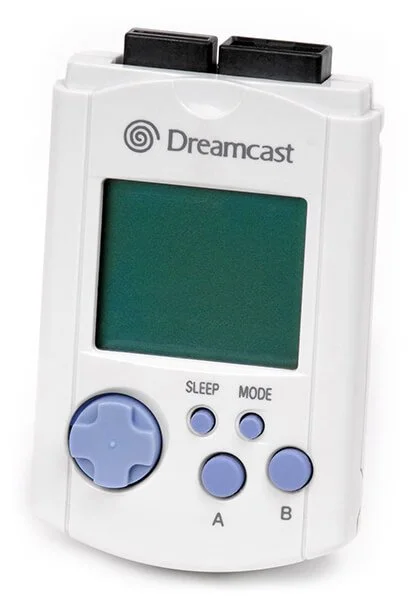
Image: © SEGA – Dreamcast Visual Memory Unit (1999)
The VMU
It’s the Dreamcast’s most iconic feature, the VMU (Visual Memory Unit). This wasn’t just a memory card. It had a battery, small screen, buttons, and could function independently from the console like a tiny Game Boy.
In Sonic Adventure, you could transfer your Chao onto the VMU and raise it like a virtual pet. In sports games, the VMU displayed play selections privately. In horror games, like Resident Evil Code Veronica, it could show health meters or extra information.
It was the precursor to second-screen functionality that wouldn’t become common for a long time. Another visionary moment from SEGA.
Years later, we would see similar ideas with the Wii U GamePad, smartphone companion apps, and handheld-console integration. The Dreamcast experimented with that concept long before it was common and it was a fan-favorite feature that truly set it apart.
Each controller had 2 memory card (VMU) ports which meant you could have up to 8 memory cards plugged in all at once if you had 4 controllers. That was a crazy amount of save data storage back then!
With the Dreamcast, Sega was showing everyone that they weren’t afraid to try new things.
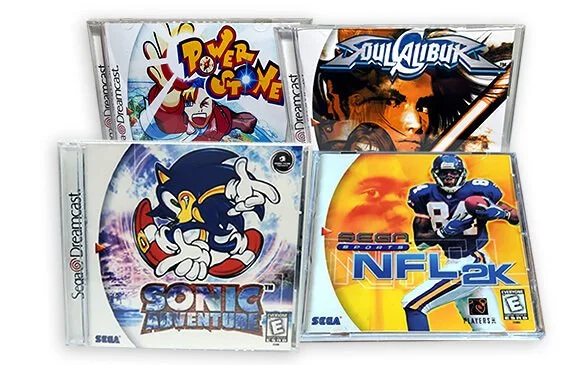
A Launch Library That Can’t Be Beat
While many consoles struggle with lackluster launch lineups, the Dreamcast came out swinging.
Its lineup was packed with quality and variety:
Soul Calibur – A graphical showcase and one of the best fighting games ever made.
Sonic Adventure – A bold reinvention of Sega’s mascot in 3D.
Power Stone – A chaotic, arena-based fighter that still feels unique today.
NFL 2K – A serious competitor to Madden with broadcast-style presentation.
And more. A total of 19 games were available at launch.
The Dreamcast launched with confidence. It felt like Sega had learned from past mistakes and was ready to compete.
For a brief time, it worked. The Dreamcast sold over 500,000 units in its first two weeks in North America. Hype was real. Even now, many consider the Dreamcast’s launch lineup one of the strongest of all time.
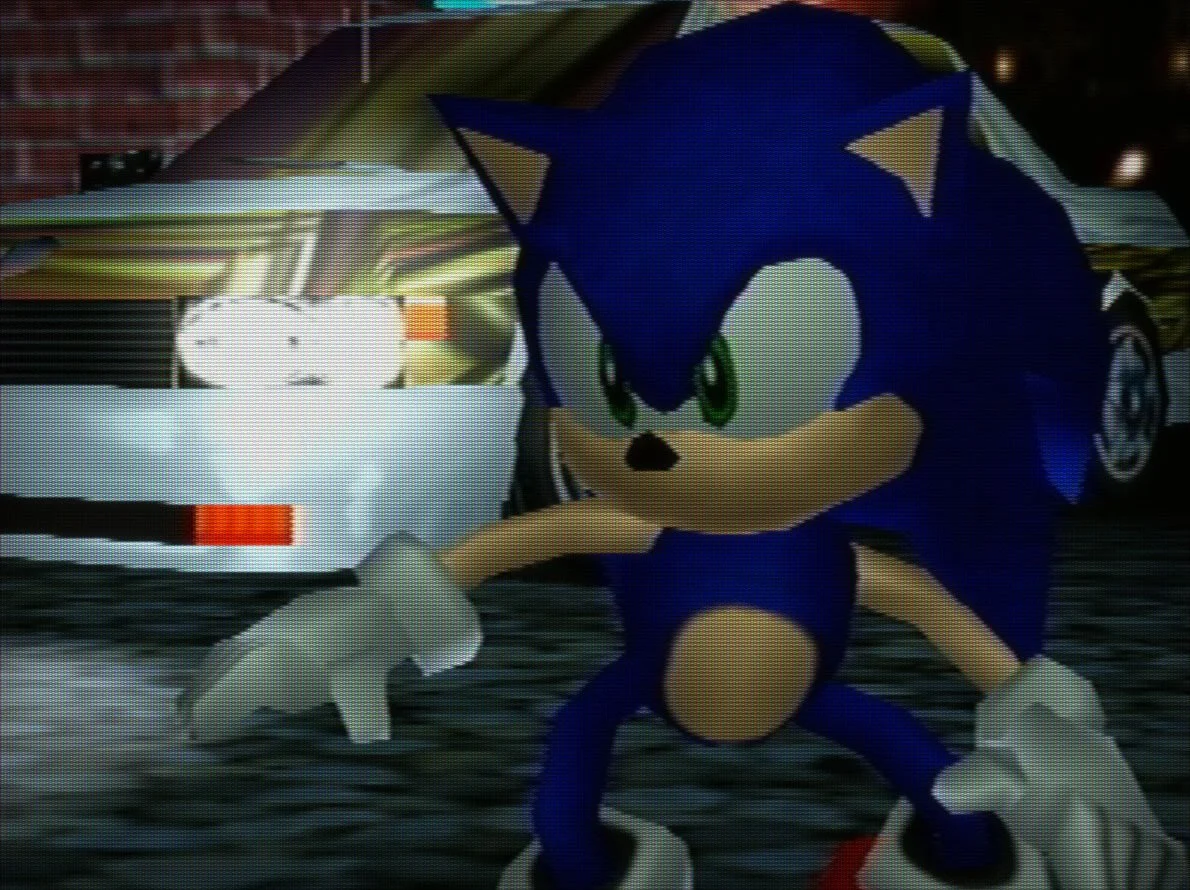
Sonic Adventure - Dreamcast
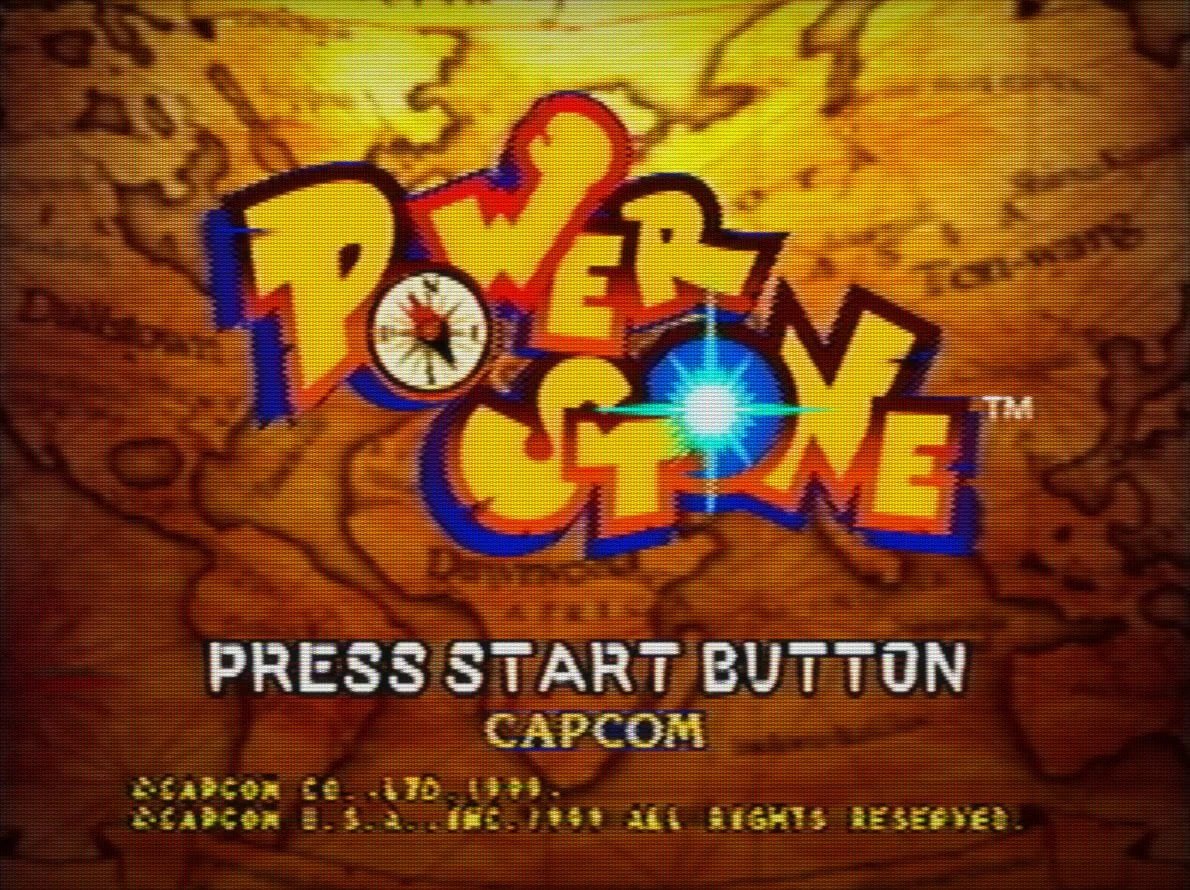
Power Stone - Dreamcast

Soul Calibur - Dreamcast
But then the PlayStation 2 arrived…
The Fall: Timing and Tough Competition
Despite its innovation, the Dreamcast faced massive challenges. Sony’s PlayStation 2 launched with DVD playback, making it more than just a gaming console. It became an affordable DVD player at a time when standalone DVD players were expensive. Sega was also recovering from the commercial struggles of the Sega Saturn. Consumer trust had weakened.
Even though the Dreamcast had better early software, the PS2’s long-term third-party support overwhelmed Sega’s efforts. Major developers shifted focus to Sony’s platform.
In 2001, Sega announced it would discontinue the Dreamcast and transition to third-party software development. It was the end of Sega as a hardware manufacturer.
But it was not the end of the Dreamcast’s influence.
Cult Legacy and Influence That Refuses to Fade
Though the Dreamcast was discontinued in 2001 due to the rise of the PlayStation 2 and Sega’s financial troubles, it left a legacy far bigger than its install base. It cultivated a loyal fanbase that continues to support it to this day.
The Dreamcast's ideas of online gaming, modular hardware, strong first-party innovation are foundational to modern console design. Companies like Microsoft clearly took notes, with Xbox Live launching just two years after the Dreamcast bowed out.
The Dreamcast wasn’t just another console, it was a bold experiment that was ahead of its time. From pioneering online play to pushing 3D graphics and open-world design, Sega’s swan song changed gaming more than it’s often given credit for.
While it may not have "won" its generation, the Dreamcast's influence echoes in every online match, every arcade compilation, and every second-screen app we use today. It’s no wonder retro gamers still speak of it with such admiration.
Few consoles inspire loyalty like the Dreamcast.
Even decades later, fans continue to develop indie games for the system and new physical releases still appear. Why?
Because the Dreamcast is a great platform that represents creativity without compromise and it tried to do something to move gaming forward instead of playing it safe.
Its ideas live on in modern gaming:
Built-in online connectivity is now standard.
Digital communities define multiplayer gaming.
Arcade-quality ports are expected.
Open-world immersion is a core design pillar.
Experimental hardware features continue to shape innovation.
While it may not have survived the console wars, its DNA is everywhere. In every online match. In every massive open world. In every bold design experiment.
That’s why retro gamers still speak of it with admiration. It truly changed gaming forever.